Why Student Behavior is a factor in Driver Retention.
I’ve hosted town hall meetings with school bus drivers at more than two dozen districts and charter schools. We would discuss school bus driver retention and what key factors are important to them.
I asked them a simple question: “What’s the hardest part of your job?”
I expected to hear about tight routes, early mornings, or difficult parents.
Instead, I heard three words over and over again:
“I feel unsafe.”
They weren’t talking about traffic. They weren’t talking about the roads.
They were talking about the students on their bus—and the lack of support when things go wrong.
The Data Point
This isn’t just anecdotal. In industry surveys, over 40% of drivers cite student behavior as a factor in considering leaving. Not routes. Not wages. Behavior.
And here’s what I learned in those town halls: It’s not the behavior itself that breaks drivers. It’s writing up a student and never hearing what happened next.
The Problem
In a school, a teacher stands at the front of the room, facing the students, with their full attention on behavior.
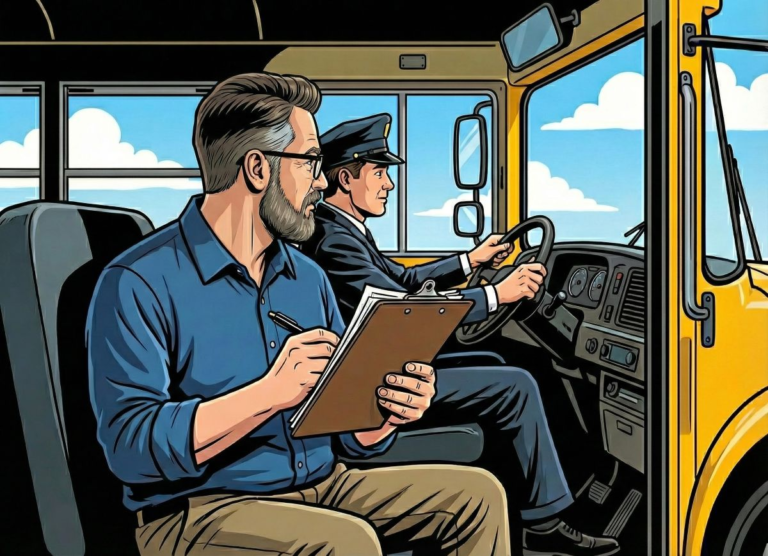
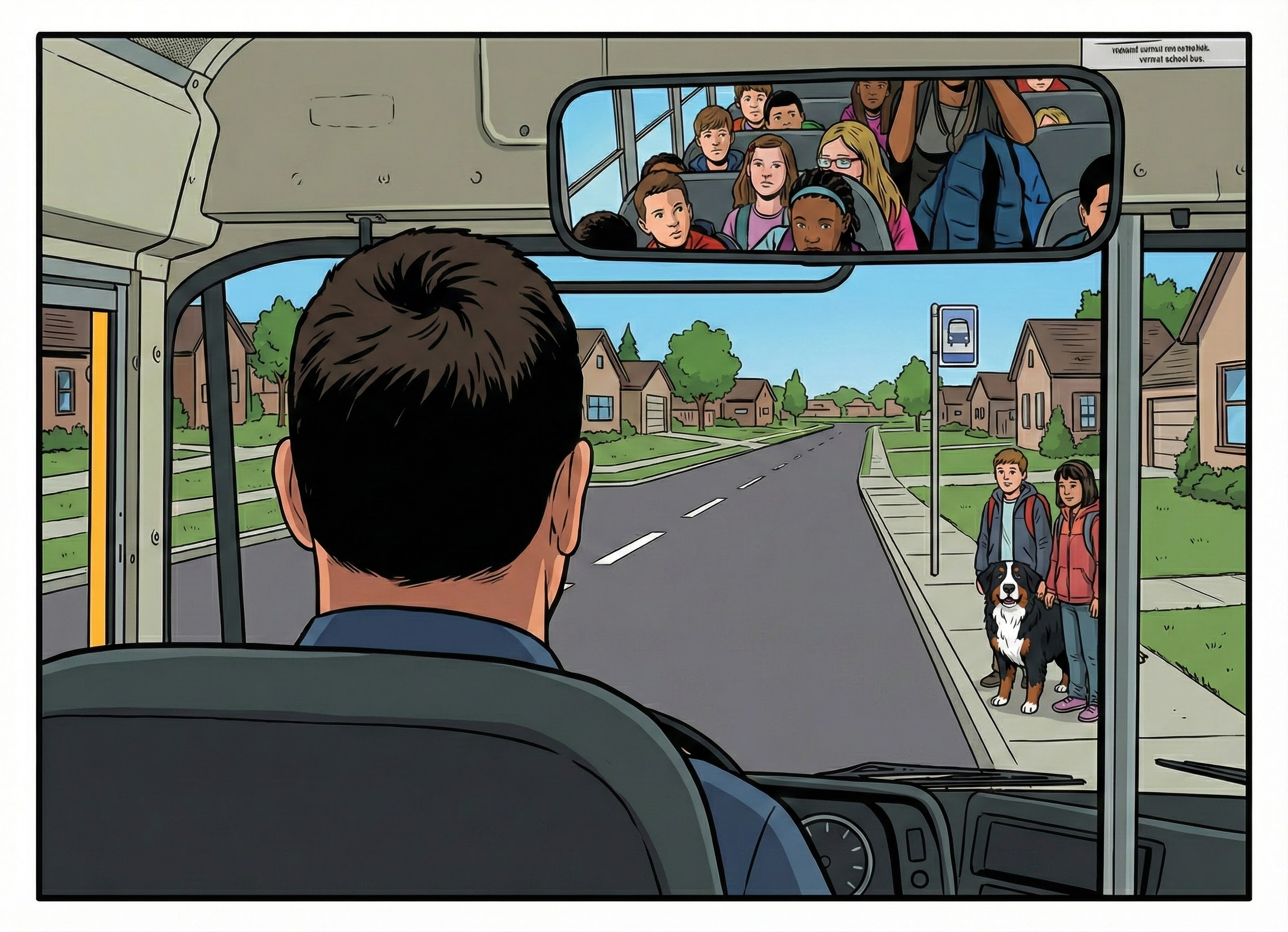
In a bus, the driver has their back turned, watching traffic, checking mirrors, and navigating blind spots—all while managing 50 students in a confined space.
Yet, in most training programs, “Student Management” gets maybe 30 minutes—wedged between backing maneuvers and emergency evacuation drills. We hand them a referral pad and say, “Write them up if they act out.”
That is reactive. By the time a referral is written, the driver is already stressed, the student is already escalated, and the safety of the bus is compromised.
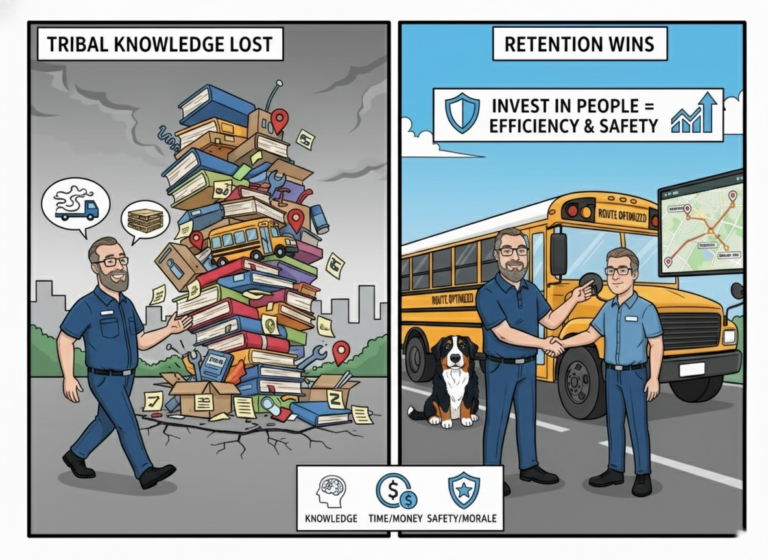
But here’s what breaks drivers faster than the behavior itself: writing up a student and never hearing what happened next.
When there’s no follow-up, no consequence, no communication back to the driver—they stop writing referrals. They stop believing anyone cares. And eventually, they stop showing up.
The Real Issue
This isn’t just a driver training problem. It’s a policy and accountability problem.
Many districts and charter schools are caught in an impossible tension:
- Keep the bus safe for all students
- Keep classroom attendance numbers up (because funding depends on it)
So what happens? The student who threatened another kid on the bus is back on the same route the next day. No conversation with the driver. No safety plan. Just a quiet hope that “it won’t happen again.”
And the driver? They feel abandoned.
The Solution
We need two things:
1. Give drivers de-escalation tools—not just rulebooks.
Teach them how to lower the temperature on the bus without taking their eyes off the road. It’s the difference between “SIT DOWN NOW!” (which challenges the student) and “I can’t drive until you’re safe. Help me out.” (which invites cooperation without losing authority).
2. Build policies with teeth AND follow-through.
A referral system only works if:
✅ There’s a clear, documented process for what happens next
✅ The driver is told the outcome (even if it’s just “we addressed it”)
✅ There’s an escalation path for repeat offenders
✅ Safety trumps seat time when a student is a danger to others
Districts need to find the balance. Yes, we want kids in class. But we cannot sacrifice the safety of 49 students—and the retention of a trained driver—to avoid a difficult conversation with one family.
The Free Resource
I’ve put together a tool for your fleet: The Driver De-Escalation & Accountability Guide.
It’s a visor-ready resource with:
✅ 5 “Go-To” Scripts for common behavior issues
✅ A “Red Light / Green Light” chart for when to pull over vs. keep driving
✅ The “3-Second Reset” technique to prevent driver anger
✅ Legal protection documentation checklist
✅ A sample policy framework for behavior accountability
If you want to give your drivers a tool they can actually use—and start a conversation about real accountability—grab the free guide below.
What’s one thing you’ve done this year to support your drivers with student behavior? Drop it in the comments—let’s learn from each other.