Managing Remote Employees for New Managers | SchoolBusInk
There’s a disconnect between how leaders think remote work should function and how high-performing remote employees actually thrive. For many leaders, learning to manage a team is hard enough. But learning how to manage remote employees for new managers is a completely different challenge. Here’s what I’ve learned from being on both sides of the divide…
Over my 25 years in operations, I’ve seen the workplace evolve in incredible ways. I’ve spent my career as both a remote employee and a remote leader, giving me a unique 360-degree view of the challenges and opportunities that come with a distributed workforce.
The shift to remote work isn’t just a trend—it’s a fundamental change in how we connect, collaborate, and lead. As noted in an article in Harvard Business Review, remote work is not going away and productivity is improving. Success requires a new playbook for everyone involved. In this four-part series, I’ll break down the key dynamics of effective remote work, drawing from decades of firsthand experience.
Lets start with the anatomy of a high-performing remote employees that new managers should look for.
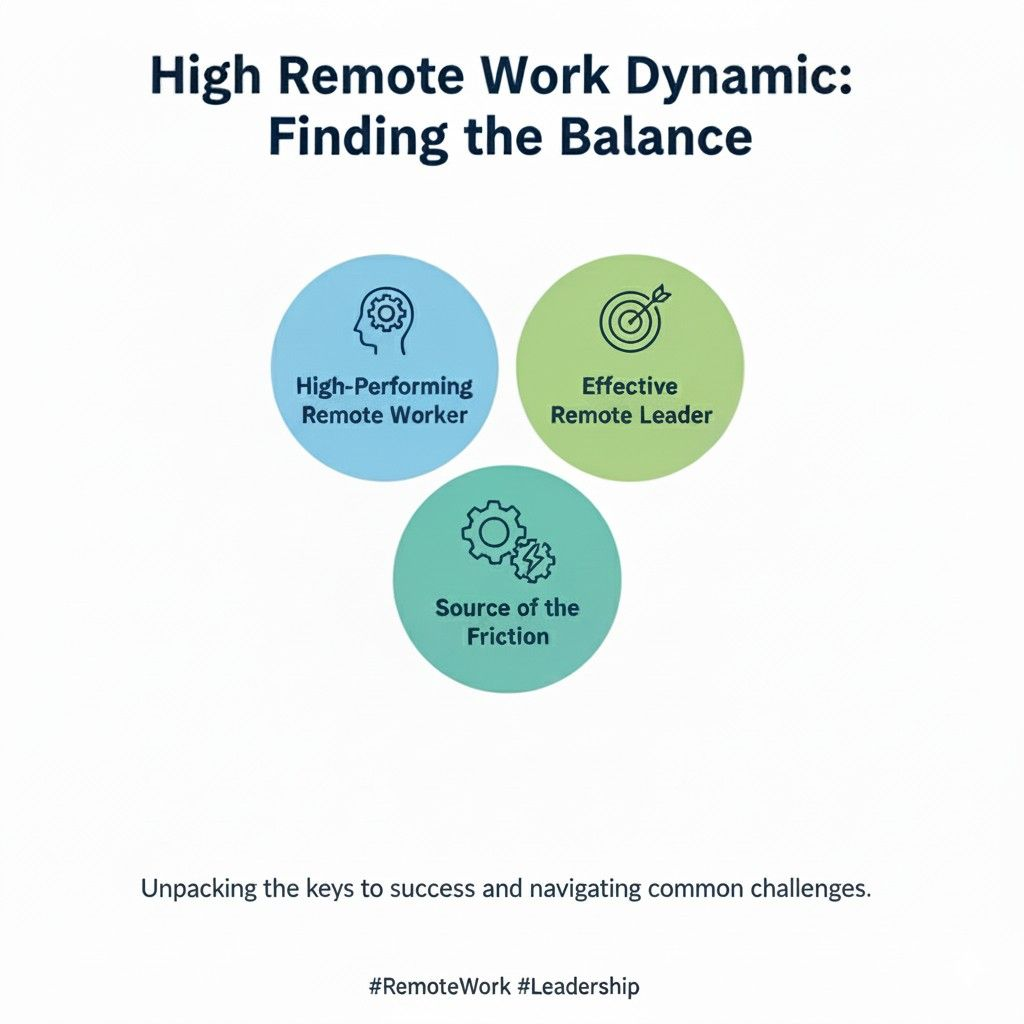
Thriving as a remote worker requires a specific set of skills that go beyond traditional office competencies. Success hinges on the ability to remain productive and engaged without the physical structure of a central workplace. These key elements can be distilled into three core areas.
Disciplined Autonomy:
This is the cornerstone of effective remote work. Since a manager isn’t physically present, the individual must be self-managed. This involves a strong sense of self-discipline and the ability to manage one’s own time effectively. Successful remote employees are self-starters; they take the initiative. They can maintain a consistent work ethic without direct supervision and take complete ownership of their responsibilities to deliver reliable results.
Intentional Communication:
When face-to-face interaction is limited, communication becomes a more deliberate and critical skill. Since you can’t rely on physical cues, communication must be clear, frequent, and proactive. This includes clarity in writing to convey ideas unambiguously, responsiveness to keep projects moving, and tech-savviness to master the digital tools the team uses for collaboration.
Personal Resilience:
The autonomy of remote work can bring unique challenges, such as feelings of isolation or the blurring of work-life boundaries. The most successful remote employees possess the personal fortitude to navigate these potential pitfalls. This includes adaptability to handle changes in technology or processes, resourcefulness in solving problems independently, and the ability to set clear boundaries between work and home life to avoid burnout.
Ultimately, a high-performing remote worker doesn’t just do their job—they take ownership of their role within the digital ecosystem. By mastering disciplined autonomy, intentional communication, and personal resilience, they become invaluable assets to any distributed team.
What other traits have the most successful remote workers? Share your thoughts in the comments!
In my next post, I’ll flip the script and break down the essential traits of an effective remote leader. and what they need to do to manage remote employees as a new managers