The Remote Leadership Challenge: Why Managers Struggle to Trust
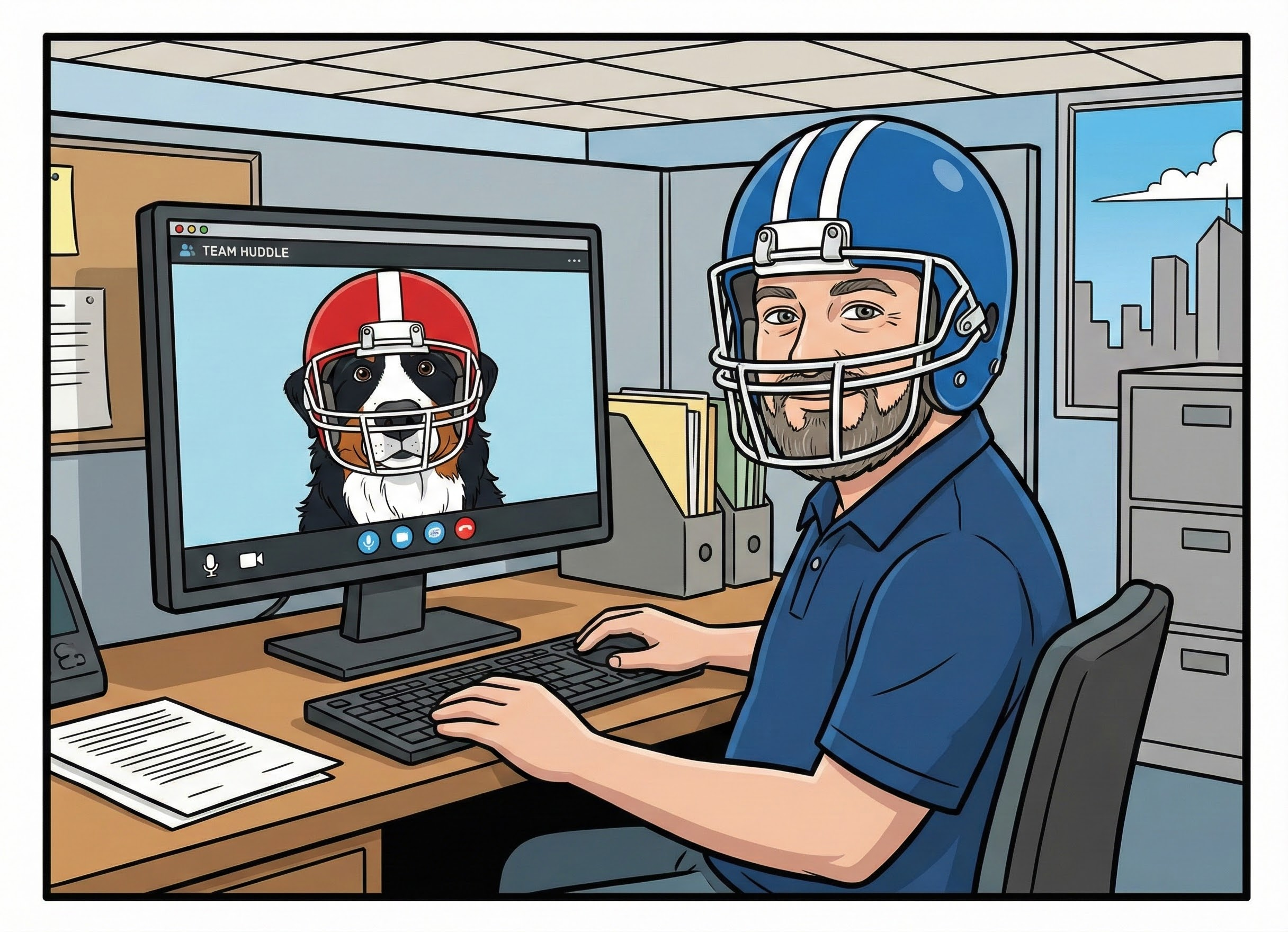
Remote Workers: Why do so many leaders feel like they’re managing a fantasy team they can’t watch, Forced to trust the final score without seeing any of the action?
(This is Part 3 of our 4-part series on The Remote Worker Dynamic. You can read Part 1 here and Part 2 here .)
The Source of Friction: Understanding the Leadership Challenge
A disconnect often exists between leadership and remote workers. This arises because many managers are used to an in-office environment. Consequently, managers find the inability to physically see their team working unsettling.
Perceived Loss of Control and Visibility:
Traditional managers often rely on “being present.” They view seeing employees at their desks as a proxy for productivity.
However, in a remote setup, they must shift their focus to outcomes. This shift can be uncomfortable. Furthermore, it can breed a lack of trust and a persistent fear that employees will not work as hard without direct supervision, even if that fear is unfounded.
Erosion of Company Culture:
Leaders often see the physical office as the primary incubator for company culture. Therefore, they worry that a distributed workforce can lead to a sense of disconnection.
Specifically, the lack of spontaneous collaboration, like “water cooler” conversations and informal brainstorming sessions, is hard to replicate virtually. Many credit these interactions with fostering innovation and strong team bonds
Communication and Collaboration Hurdles:
While technology enables remote work, it also presents new challenges. For instance, in text-based communication, people easily misinterpret tone without non-verbal cues. This often leads to misunderstandings.
Additionally, without a central physical space, information risks becoming siloed. As a result, leaders must be more intentional about creating clear communication channels.
Resistance to Change and Proximity Bias:
Many current leaders built their careers in traditional office environments. Consequently, they lack formal training on how to lead a distributed team.
This can lead to a natural tendency for managers to favor employees they see in person. This creates an unfair playing field where remote workers often get overlooked for promotions and important projects. Ultimately, the issues many leaders have with remote work are less about the concept itself. Instead, it is about the significant shift it requires in management philosophy.
Conclusion
In summary, the tension is real. It’s rooted in tangible fears like loss of control, decay of company culture, and proximity bias. Recognizing these sources of friction is a critical step. It’s like realizing your fantasy team isn’t scoring because the whole strategy is flawed, not just because one player had a bad week.
Be sure to join me for my fourth post, where we pivot from problems to solutions: “A Leader’s Key Practices for Success.”
Follow me on LinkedIn