Bridging the Gap Between Operations and Maintenance: A Guide for Fleet Leaders
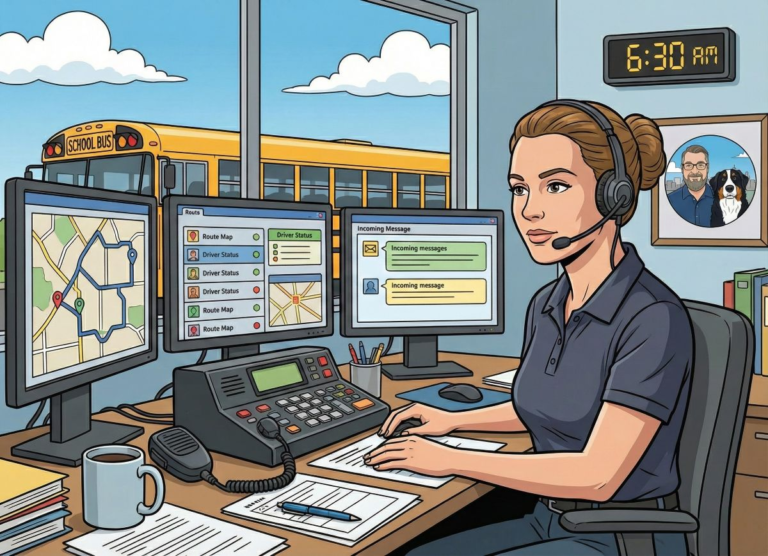
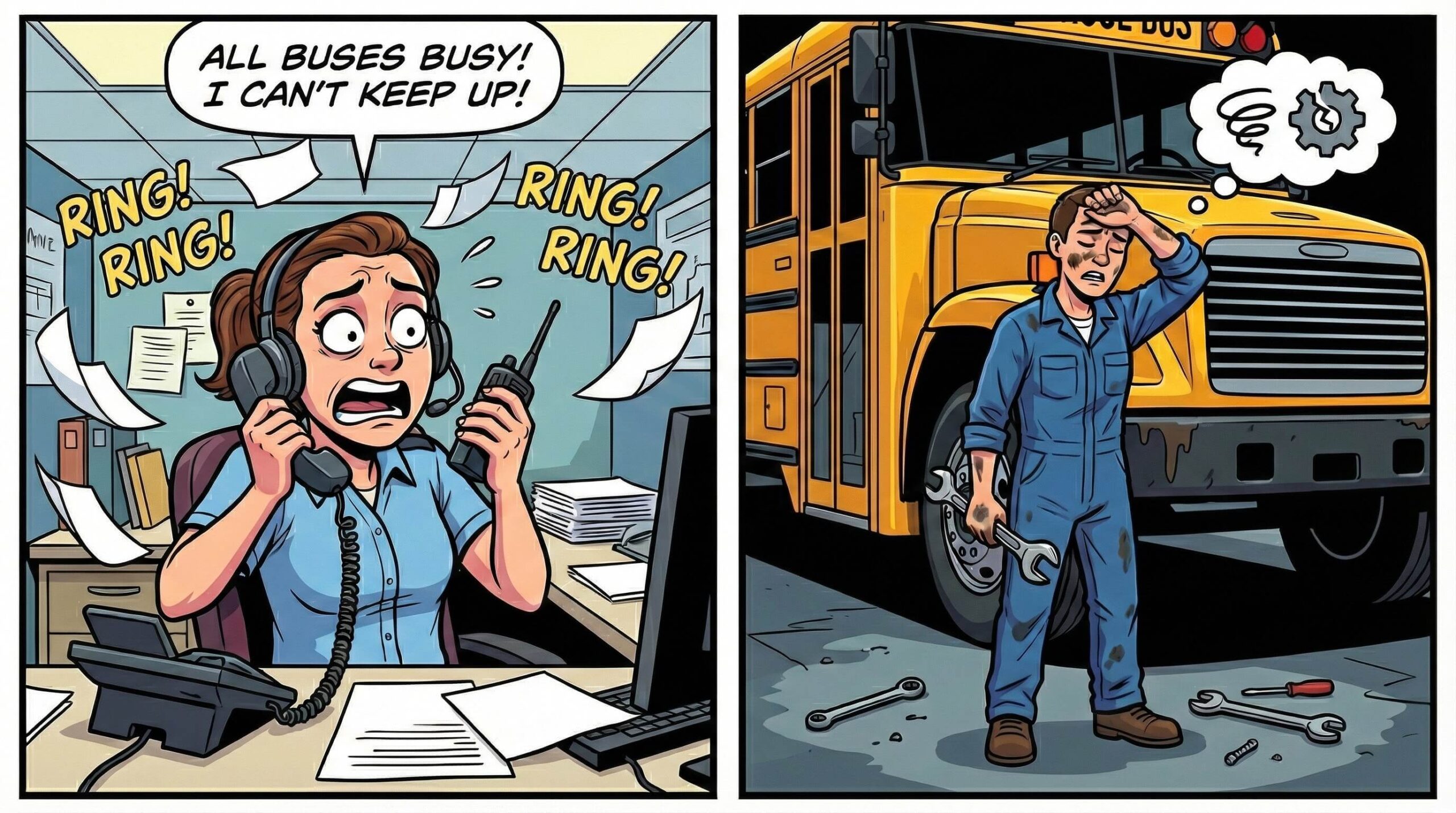
The loudest arguments in transportation terminals happen at 6:00 AM. Its imperative that you have good communication between operations and maintenance.
The Dispatcher: “I need Bus 104 right now. I have 50 kids waiting on a corner, no spare drivers, and the principal is calling every 5 minutes.”
The Head Mechanic: “Bus 104 has a cracked leaf spring. I told you yesterday this was coming. It’s not moving until I get the part.”
This isn’t just a disagreement; it’s a collision of two different worlds. Operations lives in the “Now”—focusing on service, timeliness, and customer complaints. The Shop lives in the “How”—focusing on DOT compliance, safety thresholds, and parts availability.
When these departments are at war, everyone loses—routes get delayed, costs climb, and your best people burn out. You end up with “pocketed” keys, passive-aggressive work orders, and a fleet that never runs at full capacity.
Here is how to stop the fighting and build a bridge between the front office and the shop floor.
1. The Daily “Shop Flow” Stand-up
Most friction comes from surprise. Dispatch is surprised a bus isn’t ready; the Shop is surprised Dispatch needs that specific bus.
Kill the surprises with a 10-minute daily stand-up.
- Time: Every single morning (or afternoon, depending on your peak).
- Attendees: Dispatch Lead and Head Mechanic.
- The Agenda: Review the “Down List” and the “Must-Have” list.
When Dispatch knows why a bus is down (e.g., “waiting on a sensor, arriving Tuesday”), the anger dissipates. When the Mechanic knows why you need a specific vehicle (e.g., “It’s the only one with undercarriage storage for the band trip”), they can prioritize accordingly.
One district I worked with reduced morning route delays by 40% just by implementing this daily stand-up.
2. Create a Unified “Out of Service” (OOS) Standard
“It makes a funny noise” is not a diagnosis. “It’s broken” is not a status.
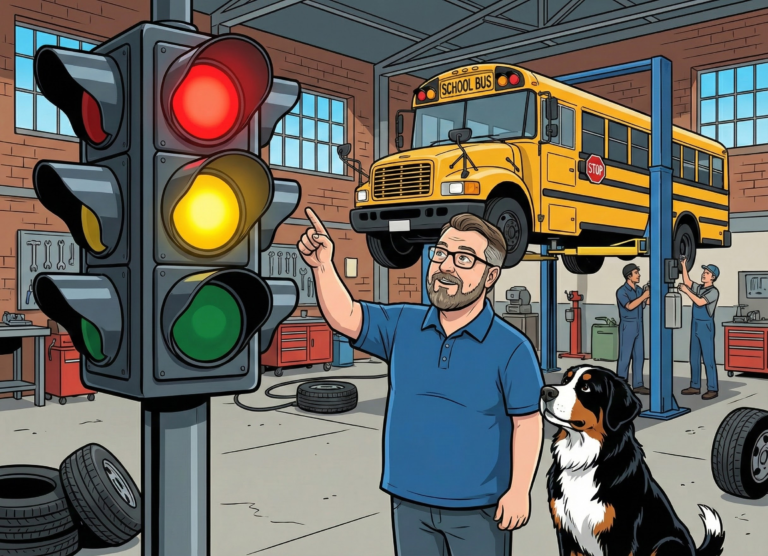
Ops and Maintenance need a shared language for vehicle status. I recommend a simple Red/Yellow/Green tag system (physical or digital):
- Red Tag (Hard Down): Safety issue. DOT violation. Brakes, tires, lights. Rule: Dispatch never asks for this bus.
- Yellow Tag (Shop Hold): Needs work, but safe to drive in an emergency (e.g., A/C is out, seat fabric torn). Rule: Dispatch can use if desperate, but agrees to return it ASAP.
- Green Tag (Ready Line): Fueled, inspected, and ready to roll.
Critical addition: When a bus status changes, the mechanic updates the system immediately and texts the dispatch lead. No “I didn’t know it was ready” excuses.
When you agree on the definitions, you stop arguing about the decisions.
School Bus Out of Service (OOS) Criteria
| System | Component | Condition | Status & Operational Rule |
|---|---|---|---|
| Breaks | Pad/Shoes | Metal-on-metal grinding or < DOT min | RED – Hard Down: Do not key. |
| Safety | Stop Arm | Lights no flashing or arm not extending | RED – Hard Down: Illegal in most states. |
| Drivetrain | Transmission | Slipping, delayed engagement, or grinding | RED = Hard Down: Risk of stranding mid-route. |
| Tires | Tread/Sidewall | Tread depth < 4/32″ (steer) or visible cuts exposing ply | RED – Hard Down: DOT Violation. Do no move. |
| Body/Safety | Side Mirrors | Loose bracket (won’t hold adjustment) or cracked glass | RED – Hard Down: Driver cannot see safely. |
This is just a preview. The full Shop Alignment Kit includes criteria for Fluid Leaks, HVAC, Crossing Gates, and more. Source: School Bus Ink Shop Alignment Kit
3. Teach Dispatch to “Speak Mechanic”
Mechanics are data-driven problem solvers. Dispatchers are often emotional problem solvers.
Train your dispatchers to write better DVIRs (Driver Vehicle Inspection Reports).
- Bad: “Brakes feel weird.”
- Good: “Brake pedal travels to the floor before engaging; hearing a squeal on the front right side.”
The more specific the information from Ops, the faster the Shop can diagnose and fix the problem. Respect their time by giving them good data.
4. Teach Mechanics to “Speak Dispatch”
This has to go both ways.
Mechanics should understand route criticality—there’s a difference between a regular run and a wheelchair-accessible route with no backup vehicle. They should also learn to communicate repair timelines in dispatch-friendly terms.
- Bad: “It needs four hours.”
- Good: “It’ll be ready for the 2:30 run, but I can’t promise it before that.”
When mechanics understand the operational impact of their decisions, they can prioritize the work that keeps the operation moving.
Stop the Arguments Before They Start
Don’t have time to create a “Red Tag” policy from scratch? I’ve done it for you.
I created the Shop Alignment Kit—a free resource to help Ops and Maintenance get on the same page. It includes:
- The “Red vs. Yellow” Decision Matrix so there is no confusion on what is safe to drive.
- Printable Dashboard Tags to organize your key board.
- The “Morning Stand-Up” Agenda to keep your 6:00 AM meetings under 10 minutes.
The Bottom Line
Your Head Mechanic isn’t the enemy; they are the goalie. They are the last line of defense preventing a catastrophic failure on the road. Your Dispatcher isn’t reckless; they’re the front line managing angry parents, tight schedules, and impossible demands.
When Operations respects the wrench, and the Shop respects the schedule, you stop fighting each other and start fighting the real enemy: inefficiency.